Peptides for Research: A 2026 Landscape Analysis for European Scientists
Understand RUO classification, COA verification, and how to evaluate research peptide suppliers in Europe's evolving 2026 market landscape.
By RCpeptides Research Team

The landscape of peptide science is shifting faster than most researchers can track. Regulatory recalibrations across the European Economic Area, evolving supplier ecosystems, and an expanding catalogue of novel sequences are collectively redefining how laboratories source, validate, and apply their compounds. For scientists working at the frontier of biochemistry, pharmacology, and structural biology, staying ahead of these changes is not optional; it is operationally critical.
This analysis was written specifically for advanced researchers who need more than surface-level commentary. Using peptides for research in 2026 means navigating a more complex procurement environment, understanding tighter purity and documentation standards, and making informed decisions about which synthetic platforms best serve your experimental objectives. Whether your work involves receptor binding studies, epitope mapping, or metabolic pathway investigation, the decisions you make at the sourcing stage have measurable downstream consequences.
In the sections that follow, this piece examines the regulatory context shaping European peptide supply, highlights emerging compound categories gaining traction in peer-reviewed literature, and offers a grounded assessment of quality benchmarks that serious researchers should be applying right now.
The State of the European Research Peptide Market in 2026
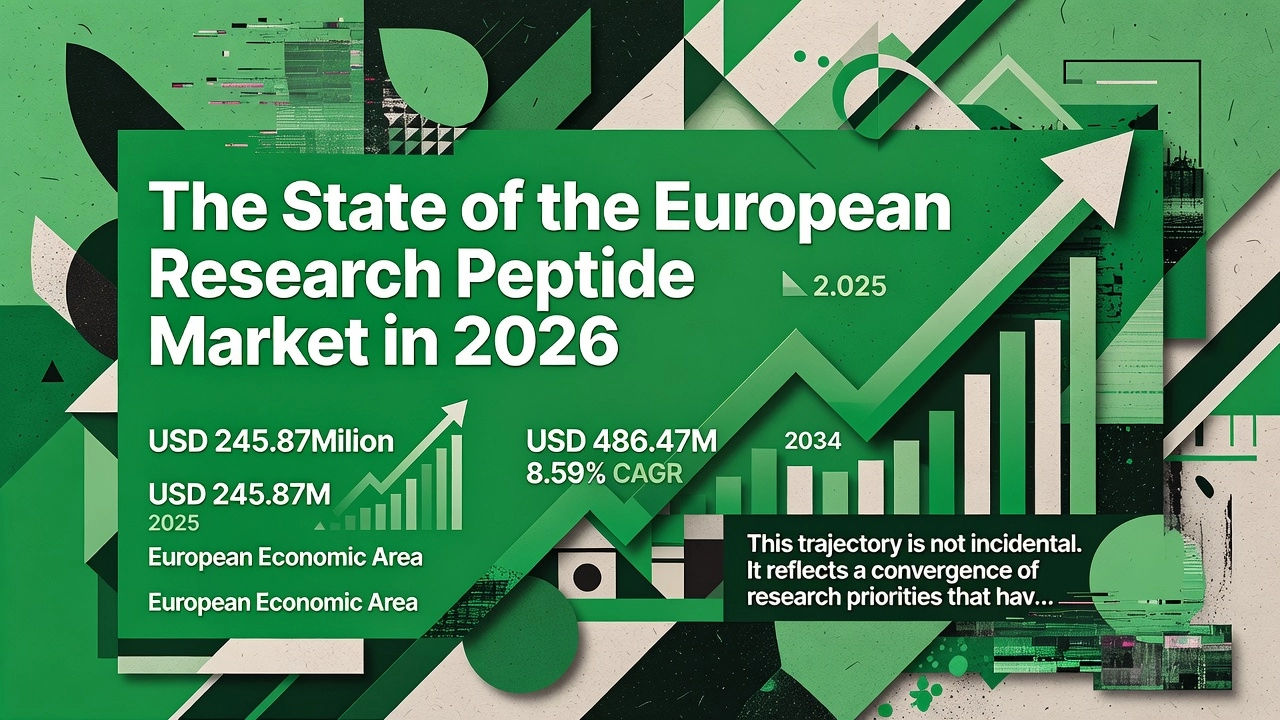
The Europe peptide market was valued at USD 245.87 million in 2025 and is projected to reach USD 486.47 million by 2034, expanding at a compound annual growth rate of 8.59% according to Market Data Forecast. This trajectory is not incidental. It reflects a convergence of research priorities that have reshaped institutional procurement across the continent. GLP-1 receptor agonist compounds, including semaglutide, tirzepatide, and retatrutide, have generated sustained procurement demand across academic and biotech settings, with retatrutide remaining a 100% research-use-only molecule while Eli Lilly continues Phase III trials. Tissue repair peptides such as BPC-157 and TB-500 represent a parallel surge in laboratory interest, as do GHRH analogs including CJC-1295 and ipamorelin, which remain active areas within growth hormone axis research. These are not niche compound classes; they represent the structural core of European research peptide demand in 2026.
The scale of this market becomes clearer in global context. The global peptide synthesis market reached USD 1.9 billion in 2026, and the French research peptide segment alone has grown at +40% annually since 2023, driven substantially by GLP-1 agonist interest and GHRH analog research activity. This signals institutional and biotech demand of considerable depth, concentrated increasingly within European supply infrastructure rather than transatlantic logistics chains.
That concentration is, in part, a direct consequence of market disruption originating in the United States. The collapse of Peptide Sciences in March 2026, a vendor generating an estimated USD 7.4 million per month in revenue, removed the single largest US research peptide supplier from the market without warning. Amino Asylum was physically raided by FDA agents in June 2025. The founders of Paradigm Peptides faced federal charges. At least seven additional vendors closed throughout 2025. These were not marginal operators; several carried extensive catalogues and established customer bases. Their removal demonstrated conclusively that brand recognition and catalogue size are not proxies for operational or regulatory stability.
For researchers now re-evaluating their supply chains, this creates a structural problem. The familiar heuristics no longer apply, and independent quality testing has revealed significant inconsistencies even within previously trusted catalogues. A structured assessment framework, covering verifiable third-party documentation, jurisdictional compliance, and analytical method transparency, is no longer optional; it is operationally necessary.
Within this context, the Netherlands carries specific market relevance. It is explicitly named as a country segment in the Europe Peptide Market report covering 2026 to 2034, situating Dutch-based suppliers within the most commercially and regulatorily significant geography for European research peptide distribution. Operating under EU regulatory frameworks rather than US enforcement jurisdiction is not simply a compliance consideration; it is now a material factor in supply chain resilience for research institutions operating at institutional and B2B scale.
What Research Peptides Are and What RUO Classification Actually Means
Research peptides are synthetically produced short-chain amino acid sequences, typically ranging from 2 to 50 residues in length, constructed using solid-phase peptide synthesis or liquid-phase methods. They are designed to interact with specific biological targets under controlled experimental conditions: receptor subtypes, signalling cascades, protein-protein interactions, and cellular metabolic pathways. Their molecular specificity is precisely what makes them indispensable in drug discovery, diagnostic development, cancer biomarker research, and metabolic disease modelling. The defining characteristic of a research peptide is its intended context of use: these are not medicines, dietary supplements, cosmetic actives, or consumer products. They are laboratory reagents, synthesised and supplied exclusively for in-vitro and controlled research applications.
The RUO Designation: What It Is and What It Is Not
Research Use Only is a formal classification, not a marketing label or a signal of reduced scientific credibility. The designation defines intended use and procurement context. A compound classified as RUO is being supplied as a research reagent for investigational purposes in a qualified laboratory setting. It has not completed the clinical development pathway required for therapeutic or diagnostic use, but that distinction says nothing about its scientific importance. Internationally, RUO classification is the standard operating framework for compounds under active investigation at pharmaceutical companies including Novo Nordisk and Eli Lilly, at academic research institutions, and within CRO settings. Procurement documentation across these environments routinely specifies RUO intent as a categorical requirement, because classification accuracy carries direct compliance implications.
A critical operational point for institutional buyers is that the RUO label does not function as a universal regulatory shield. As Research Use Only Peptides: Legal Gray Area Explained makes clear, intended use governs classification in practice. When a supplier uses therapeutic language, discusses dosing protocols for human use, or markets RUO compounds to non-laboratory buyers, those products are effectively being represented as unapproved drugs, regardless of what the label states. University compliance offices and CRO quality systems require procurement documentation that accurately reflects the research-only nature of these materials; suppliers who blur this boundary create downstream liability for their institutional customers.
The Semaglutide Pipeline as the Definitive Case Study
The clearest illustration of what the RUO phase actually represents scientifically is the development timeline of semaglutide, now marketed as Ozempic. The compound spent approximately 15 years in research-phase investigation before receiving FDA approval in 2017. During that extended pre-approval period, the foundational mechanistic work occurred: GLP-1 receptor binding characterisation, metabolic effect profiling, and the structural modifications that gave semaglutide its therapeutic durability were all established through controlled in-vitro and preclinical research. As therapeutic peptide research demonstrates, this pipeline pattern is not exceptional but structural: the most clinically significant peptides in recent pharmaceutical history passed through years of RUO-phase investigation before any regulatory transition.
Retatrutide, Eli Lilly's GLP-1/GIP/glucagon receptor triagonist currently in Phase III clinical trials, remains a fully RUO compound as of 2026. Researchers investigating triple receptor agonism and its implications for metabolic disease are sourcing it through documented research channels, applying exactly the same procurement framework that governed semaglutide research a decade ago. The compounds attracting the greatest current scientific interest in academic and biotech settings are, by definition, RUO materials. Recognising that classification as a mark of scientific relevance rather than a limitation is fundamental to understanding how the peptide research pipeline actually functions.
Procurement teams, compliance officers, and research leads working with these materials should treat RUO classification not as an administrative formality but as a substantive designation with operational weight. As The Complete Guide to Research Peptides outlines, even within the RUO category there are meaningful quality tiers, from crude preparations below 70% purity through research-grade HPLC-purified materials at 95 to 98%, to premium research-grade compounds exceeding 98% purity. Matching the appropriate grade to the specific protocol is a technical decision with direct consequences for data reliability and downstream reproducibility.
The European Regulatory Environment and Why Jurisdiction Matters
The regulatory context in which a supplier operates is not administrative background detail. For researchers and procurement officers sourcing peptides for research, it is a direct determinant of supplier accountability, documentation reliability, and supply chain continuity.
EMA Governance and the Structured EU Compliance Framework
Peptide therapeutics in Europe fall under the governance of the European Medicines Agency, and market analysts describe regulatory compliance as a central operational requirement for all market participants operating within the bloc. This is not a soft expectation. The EMA finalised its Guideline on the Development and Manufacture of Synthetic Peptides, which took effect in June 2026, establishing rigorous standards across the full peptide lifecycle from initial characterisation through to long-term manufacturing specifications. Analysts monitoring Europe's new peptide market guidelines note that synthetic peptides are now being treated with the same level of scrutiny applied to other complex pharmaceuticals. Suppliers operating within EU jurisdiction are subject to Regulation (EC) No 726/2004, Directive 2001/83/EC, and the REACH regulation governing chemical substances on the European market. Suppliers operating from outside the bloc carry none of these obligations, which creates a structural asymmetry in accountability that procurement teams should treat as a material risk variable rather than a peripheral consideration.
A particularly important legal distinction applies to research-grade materials specifically. Under Article 1(2) of Directive 2001/83/EC, a substance qualifies as a medicinal product either by presentation or by function. A synthetic peptide labelled strictly for laboratory use and sold without any therapeutic or human-use framing generally falls outside the presentation limb of this definition. This is why research-only framing, consistent documentation, and clearly positioned research-use-only supply structures carry genuine legal weight within the EU framework, not merely marketing significance.
Institutional Demand and the Commission's Biotech Investment Mandate
The regulatory environment does not exist in isolation from the demand environment it shapes. The European Commission is actively promoting biotechnology and biomanufacturing collaboration between research institutions and industry, with an explicit objective of strengthening Europe's competitive position in the global life sciences sector. This policy-driven investment creates a well-resourced and growing institutional demand for research-grade peptide materials across universities, contract research organisations, and industrial research settings. The Europe peptide market, valued at USD 245.87 million in 2025 and projected to reach USD 486.47 million by 2034 at a CAGR of 8.59%, reflects this structural tailwind. Institutional buyers operating within this environment require suppliers whose compliance posture aligns with the documentation expectations of academic and regulated research workflows.
Logistics, Customs, and the Practical Case for Intra-EU Sourcing
For time-sensitive laboratory operations, the procurement advantages of sourcing from an EU-registered supplier are concrete. Intra-EU dispatch avoids the customs classification uncertainty and import documentation burden that non-EU suppliers routinely introduce. National regulations across EU member states can impose variable import controls, specific documentation requirements, and additional testing obligations on materials arriving from outside the bloc. These friction points are not theoretical; they represent real delays to compound delivery timelines that can disrupt experimental scheduling. An EU-registered supplier dispatching within the single market removes the external customs border entirely, and compliant suppliers operating under EU standards are expected to provide batch-specific Certificates of Analysis, HPLC-verified purity data, and mass spectrometry identity confirmation as standard, all of which align with institutional procurement and audit requirements.
US Enforcement as a Risk Signal for European Procurement
The enforcement actions that reshaped the US research peptide market in 2025 and 2026 carry direct lessons for European buyers. When supplier compliance frameworks are inadequate, the consequences include abrupt shutdowns, disrupted order fulfilment, and reputational exposure for institutions associated with non-compliant sourcing. These outcomes are not geographically bounded. European researchers who sourced from vendors subsequently subject to federal action faced the same supply disruption as their US counterparts. The risk profile of sourcing from vendors operating outside transparent regulatory frameworks applies regardless of where the buyer is located.
The Netherlands as an Operationally Coherent Home Jurisdiction
The Netherlands occupies a distinct position within the European peptide supply landscape. It is explicitly named as a segmented country market in the EMA's broader regulatory science strategy and European peptide market analysis, alongside Germany, France, Italy, and Switzerland. The EMA itself is headquartered in Amsterdam, and national-level regulatory oversight is conducted by the RIVM, the National Institute for Public Health and the Environment. This institutional concentration, combined with the Netherlands' established role in EU pharmaceutical logistics infrastructure, makes it an operationally coherent jurisdiction for a research-grade supplier serving European and international research customers. For procurement teams, a Netherlands-registered supplier represents a verifiable regulatory home base rather than an opaque offshore point of origin.
How to Read a Certificate of Analysis for Research Peptides
The Certificate of Analysis is the primary quality assurance mechanism for research peptides, operating in a market without the pharmaceutical-grade regulatory oversight that governs licensed medicines. Understanding how to read one critically, rather than simply accepting it at face value, is a foundational competency for any serious researcher or procurement officer. Most COAs currently circulating in the research peptide market are technically formatted but analytically insufficient; they report a purity percentage and confirm a molecular weight while omitting the information needed to identify actual failure modes.
Document Credibility Starts with Laboratory Independence
A COA is only as credible as the independence of the laboratory that produced it. The baseline standard is third-party testing conducted by a laboratory that is entirely separate from the supplier, with results verifiable at the issuing laboratory's own portal using the batch or lot number. A self-hosted PDF published on a supplier's own website provides no independent verification pathway; any supplier could generate such a document internally. Before accepting a COA as meaningful, a researcher should identify the testing laboratory from the document, locate that laboratory through an independent accreditation directory such as A2LA or ILAC, and confirm the reported results against the laboratory's own records using the batch identifier. ISO 17025 accreditation on the issuing laboratory is the standard indicator of technical competence and measurement reliability. If laboratory credentials cannot be independently verified through these channels, the document does not constitute third-party testing in any meaningful sense, regardless of its formatting.
HPLC Purity Analysis: Capability and Constraints
High-Performance Liquid Chromatography is the most widely used analytical method for peptide purity assessment. It works by separating compound components as they pass through a stationary phase at controlled pressure, then quantifying the fraction of total peak area attributable to the target compound. The resulting purity figure reflects how much of what the instrument detected corresponds to the expected elution profile of the peptide. However, HPLC has a structurally important limitation that is rarely disclosed in supplier documentation: it cannot reliably detect impurities that co-elute with the target compound at the same retention time. Structurally similar synthesis by-products, truncated sequences, or deletion peptides that travel through the column alongside the parent compound will be recorded as part of the target peak rather than flagged as separate impurities. A reported purity of 98% via HPLC area normalisation is not a guarantee that 98% of the material is structurally correct; it is a statement about peak area distribution under the specific column and solvent conditions used. Researchers evaluating HPLC results should understand that the method is necessary but not sufficient on its own.
Mass Spectrometry: Identity Confirmation Without Purity Quantification
Mass spectrometry addresses a different analytical question than HPLC. Where HPLC measures relative abundance, MS confirms molecular identity by measuring mass-to-charge ratios and comparing the observed molecular mass against the theoretical mass of the target compound. This is essential for verifying that the compound delivered corresponds to the peptide claimed, particularly for longer sequences where synthesis errors or amino acid substitutions may not alter solubility or chromatographic behaviour significantly. The critical constraint is that MS does not quantify purity independently; a compound can return the correct molecular mass while containing structurally related impurities at levels sufficient to affect experimental outcomes. The combination of HPLC and MS is the analytical standard because it provides both dimensions simultaneously: identity confirmation at the molecular level and purity quantification by peak area. A COA reporting only one of these methods should be treated as analytically incomplete. Additionally, MS tolerance reporting is itself a quality signal; a tolerance stated as ±0.1% on a 3,000 Da peptide allows a variance of ±3 Da, which is wide enough to accommodate truncated sequences or substituted residues on modern instrumentation where accuracy within 5 parts per million is achievable.
The Purity Percentage Problem: Method Disclosure Is Non-Negotiable
Purity figures of 98% or 99% carry no analytical meaning without explicit disclosure of the method used to derive them. Purity by HPLC area normalisation, by UV absorbance at a fixed wavelength, and by weight-adjusted mass balance calculations are distinct measurement approaches that can return materially different values for the same physical sample. UV absorbance measurements are wavelength-dependent and will over- or under-represent compounds with atypical chromophore characteristics. Area normalisation assumes that all detected peaks have equivalent detector response factors, which is rarely precisely true across chemically diverse impurity profiles. A credible COA specifies the method, the detection wavelength if UV-based, and the instrument conditions. A single purity number without this context is a marketing claim formatted as analytical data.
Batch Traceability and Chromatogram Access
Batch traceability is the link between the COA and the physical material received. Every credible COA must reference a specific synthesis batch identifier that matches the lot number on the product vial exactly. Generic COAs, undated documents, or certificates that apply to a product category rather than a specific synthesis run provide no quality assurance and represent a fundamental supplier transparency failure. The batch number is the cross-reference point that makes the document meaningful; without it, there is no verifiable connection between the analysis reported and the material supplied.
Chromatogram access represents the highest level of transparency currently available in the research peptide market. Providing the actual HPLC trace rather than only the interpreted purity number allows technically literate researchers to independently assess peak shape, evaluate baseline resolution, identify impurity shoulders on the main peak, and form their own judgment about compound quality. A clean chromatogram with a single dominant peak, flat baseline, and no visible secondary signals conveys materially more information than a purity percentage alone. Suppliers who provide chromatogram images alongside interpreted results are demonstrating a level of documentation depth that separates genuine analytical transparency from formatted claims.
Active Research Areas Using RUO Peptide Compounds in 2026
GLP-1 Receptor Agonist Compounds: The Dominant Research Category
GLP-1 receptor agonist peptides have become the single largest driver of research peptide procurement growth across European academic and biotech settings. Semaglutide analogs remain central to in-vitro mechanistic investigation, particularly in studies examining receptor binding kinetics, downstream cAMP signalling, and beta-cell function models. Tirzepatide, the GLP-1/GIP dual agonist, adds complexity to these research programmes by enabling comparative receptor selectivity studies that were not feasible with single-agonist compounds alone. Retatrutide, the GLP-1/GIP/glucagon triagonist currently in Phase III trials at Eli Lilly, remains entirely within the RUO classification, meaning every laboratory examining its mechanistic profile at the in-vitro level is sourcing it through research-grade supply channels. This pipeline position illustrates a structural feature of peptide science: the most scientifically consequential compounds are frequently also the most exclusively RUO, because their investigational status means no pharmaceutical-grade supply pathway yet exists. Beyond the established names, next-wave candidates including VK2735 and amycretin are drawing increasing procurement interest, reflecting a broader diversification within metabolic peptide research programmes in 2026.
Tissue Repair and Cytoprotective Peptides: BPC-157 and TB-500
BPC-157 and TB-500 represent a distinct but equally active research cluster. Both are consistently cited among the highest-demand RUO compounds in 2026, with laboratory interest concentrated on three specific mechanistic areas: cytoprotective pathway analysis, connective tissue and tendon repair modelling, and angiogenic signalling studies. Neither compound holds approved therapeutic status in any jurisdiction, and both remain strictly within the RUO category. The FDA peptide reclassification landscape in 2026 has introduced additional scrutiny around BPC-157's status specifically in compounding pharmacy contexts, but its availability as a catalogued research material through compliant laboratory suppliers is unaffected by those pharmacy-specific determinations. For researchers investigating cytoprotective mechanisms in cell culture models, the distinction matters: the regulatory debate around therapeutic compounding does not alter the scientific rationale for in-vitro investigation, nor does it restrict the use of properly documented RUO materials within legitimate laboratory workflows.
Growth Hormone Axis Research: CJC-1295 and Ipamorelin
CJC-1295 and ipamorelin occupy a well-established position in growth hormone axis research, with continued activity in 2026 across academic endocrinology and longevity biology programmes. Research interest in this pairing centres on pulsatile growth hormone secretagogue mechanisms, the differential kinetics of sustained-release versus short-acting GHRH stimulation, and downstream metabolic regulation pathways. Ipamorelin's high selectivity profile makes it a particularly useful tool compound for studies designed to isolate growth hormone release dynamics without confounding effects on cortisol or prolactin secretion. CJC-1295, through its extended half-life via DAC modification, enables experimental designs examining sustained axis stimulation that would not be replicable with native GHRH.
Longevity and Epigenetic Peptides: An Emerging Research Category
Epithalon and structurally related epigenetic peptides are appearing with increasing frequency in longevity-focused research programmes, particularly those examining telomere dynamics, cell cycle regulation, and age-associated gene expression changes. This is an emerging but rapidly professionalising area of in-vitro investigation, moving from marginal scientific interest toward structured, reproducible research designs. GHK-Cu represents a parallel track within this category, with active investigation into interactions between copper-peptide complexes and collagen synthesis pathways. Researchers working in this area are among the most documentation-conscious procurement audiences, precisely because the field is still establishing its evidentiary base and experimental reproducibility carries heightened significance.
Why Batch Consistency Is a Scientific Requirement, Not a Commercial Claim
Across all of these research areas, a common analytical requirement applies: mechanistic reproducibility between experimental runs depends directly on compound consistency across batches. A Certificate of Analysis that confirms purity for a single batch provides no assurance about the compound used in a prior or subsequent experiment. For researchers building multi-timepoint studies, dose-response datasets, or comparative assays across cell lines, batch-to-batch variation in peptide purity or residual solvent profile is a confounding variable. This makes documented batch traceability a scientific necessity rather than a procurement preference. Suppliers who provide access to batch-specific chromatograms, mass spectrometry validation, and retained sample records enable researchers to control for compound variability in a way that point-in-time purity claims alone cannot support.
What Institutional and B2B Buyers Require From a Research Peptide Supplier
Institutional procurement workflows apply a structured qualification process to any new research material supplier, and research peptides are no exception. University procurement offices and CRO quality systems operate under audit obligations that require every approved vendor to be verifiable as a legal entity. In practice, this means a supplier must provide a company registration number, a VAT or tax identification number, and a declared country of incorporation before onboarding can proceed. These are not administrative formalities; they are the foundation on which traceability records are constructed. A supplier that cannot provide verified entity documentation cannot be defended under internal audit, grant reporting, or ethics board review, regardless of how comprehensive its product catalogue appears.
Research-Only Framing as a Compliance Requirement
Beyond legal identity, the commercial framing a supplier uses throughout its website and product materials is itself a compliance consideration for institutional buyers. Biotech startups operating under investor oversight and independent researchers working within ethics board conditions cannot afford to be associated with suppliers whose materials contain lifestyle, wellness, or performance language. Even implicit consumer-adjacent framing creates measurable compliance exposure for the purchasing institution, not solely for the supplier. A procurement officer reviewing a vendor for approved-supplier status will assess whether the supplier's materials could be interpreted as targeting a non-research audience. Ambiguity at that point is disqualifying. Suppliers serving the institutional market should maintain documented research-only framing across all product pages, order communications, and supporting materials, in a form that procurement teams can reference in their own qualification records. Understanding how to build a B2B peptide brand for universities and labs requires treating compliance infrastructure as a core commercial commitment rather than a disclaimer.
Batch-Specific Documentation Across Repeat Orders
The batch-specific Certificate of Analysis, as covered elsewhere in this article, is the record that institutional quality systems retain to demonstrate material identity and purity at the time of use. For institutional buyers specifically, the documentation requirement extends beyond the initial purchase. Labs running longitudinal studies or multi-compound protocols require consistent batch documentation across repeat orders, with each successive batch traceable to its own production run and its own independent analytical results. A supplier that provides thorough documentation on the first order but inconsistent documentation on subsequent orders creates a gap in the quality record that cannot be retrospectively corrected. Procurement officers should explicitly request, at supplier qualification stage, a description of how batch documentation is managed across the product lifecycle and how repeat-order batches are distinguished from one another in the supplier's records system.
Operational Ordering Capability for Laboratory-Scale Procurement
The structural difference between a consumer-facing checkout and a B2B procurement service matters operationally for laboratories. Institutional buyers require confirmed stock availability before committing to a research protocol, structured ordering mechanisms that accommodate procurement request workflows, and dedicated account support rather than a generalised customer service queue. Cold-chain logistics and documented dispatch conditions form a further layer of the quality record. Lyophilised peptides degrade at elevated temperatures, and the conditions under which materials were packaged and transported are part of the evidentiary chain that institutional quality systems maintain. Buyers conducting supplier qualification should request explicit documentation of dispatch packaging, cold-pack protocols, and expected transit durations as standard.
RCpeptides' Netherlands incorporation, research-only commercial framing maintained across all product materials, batch-specific third-party COA documentation, and structured B2B service capability collectively address the qualification criteria that institutional buyers need to satisfy their own compliance workflows. The company's operational structure reflects the procurement realities that university laboratories, CROs, and regulated research organisations work within every day.
Evaluating Research Peptide Suppliers in a Disrupted Market
The 2025 to 2026 period has fundamentally altered how supplier evaluation must be approached. Brand recognition and catalogue depth, previously serviceable as proxy indicators of quality, proved catastrophically unreliable when established vendors collapsed overnight or faced criminal prosecution. What has emerged in their place is a structured qualification framework built around three non-negotiable baseline requirements: independent third-party COAs verifiable at the issuing laboratory's own portal rather than a self-hosted document controlled by the supplier; confirmed intra-EU dispatch capability from a registered EU entity; and research-use-only framing that runs consistently throughout all supplier materials, not deployed selectively in legal disclaimers while marketing language implies otherwise. These criteria are not aspirational standards. Given that independent testing data indicates approximately 15 to 20% of supplier COAs show significant discrepancies when products are tested independently, with purity overstatement as the most common issue, verifiability at the issuing laboratory's portal is the operational minimum required to treat documentation as credible.
Documentation Depth as a Differentiator
Beyond these baseline requirements, substantive differentiation exists in the current market at the level of documentation depth. A purity percentage without methodological context is not independently verifiable; it is a claim. Suppliers who publish batch-specific chromatograms, specify the analytical methods used on COAs, and enable direct cross-referencing against the testing laboratory's own records provide a materially higher quality assurance standard than those who present a single purity figure without specifying whether it was derived from HPLC area normalisation, external standard quantification, or another method. For institutional procurement workflows, which require traceable, auditable documentation as standard, this distinction is not minor. It determines whether a COA can function as usable evidence in a quality record or whether it merely exists as an unverifiable assertion.
The HPLC and Mass Spectrometry Distinction
The analytical method used for testing carries direct implications for what a COA actually confirms. HPLC quantifies purity by separating and measuring sample components but does not confirm molecular identity; mass spectrometry confirms what the compound is by determining its molecular weight and fragmentation profile. A COA incorporating both methods provides compound identity confirmation alongside purity quantification. A COA supported by HPLC alone leaves molecular identity unverified. This distinction has practical relevance given documented cases in which products from enforcement-targeted suppliers were found to contain undisclosed compounds, including testosterone in products sold as research peptides. For any research workflow requiring compound identity assurance, combined HPLC plus mass spectrometry testing is not a premium feature; it is an integrity requirement.
Operational Transparency and Long-Term Viability
Supplier longevity and operational transparency have become credible evaluation criteria in their own right. A supplier that cannot demonstrate consistent legal registration, coherent public-facing materials, and an operational structure consistent with long-term institutional viability carries material procurement risk regardless of current stock availability. Researchers and procurement officers should assess whether a supplier's documentation, jurisdiction of registration, and compliance posture reflect an entity built for durability or one optimised for short-term volume in an uncertain regulatory environment.
RCpeptides, operating from the Netherlands as a registered EU entity, provides batch-specific third-party documentation, certificates of analysis, purity information, and published test results as standard across its research catalogue. Researchers can review product documentation ahead of ordering and integrate COA data directly into their supplier qualification processes, supporting the verifiable, traceable procurement workflows that institutional and independent research contexts now require.
Conclusion: What Responsible Procurement Looks Like in 2026
Responsible procurement of peptides for research in 2026 requires applying three structured layers of evaluation: verified understanding of RUO classification, rigorous COA verification methodology, and assessment of supplier structural credibility against concrete criteria including EU registration, intra-EU logistics capability, and research-only product framing throughout all materials.
The analytical threshold is unambiguous. Purity figures presented without method specification carry no evidentiary weight. A stated 99% purity supported only by a self-hosted PDF is not verification; it is a claim. Independent third-party COA documentation, traceable to the issuing laboratory's own reporting system, is the minimum acceptable standard in the current market.
The growth trajectory of the European peptide market, from USD 245.87 million in 2025 toward USD 486.47 million by 2034, creates structural pressure to establish compliant procurement workflows now rather than reactively. Researchers who build durable, documentation-led supplier relationships early will be positioned to scale without disruption as institutional scrutiny intensifies alongside market expansion.
RCpeptides, operating as a Netherlands-based, transparency-led EU supplier, provides catalogue access, batch-specific documentation, and laboratory resources designed to support exactly this kind of structured procurement approach. Researchers and institutional buyers evaluating a compliant EU supplier for their laboratory programmes are encouraged to review the available product documentation directly.